


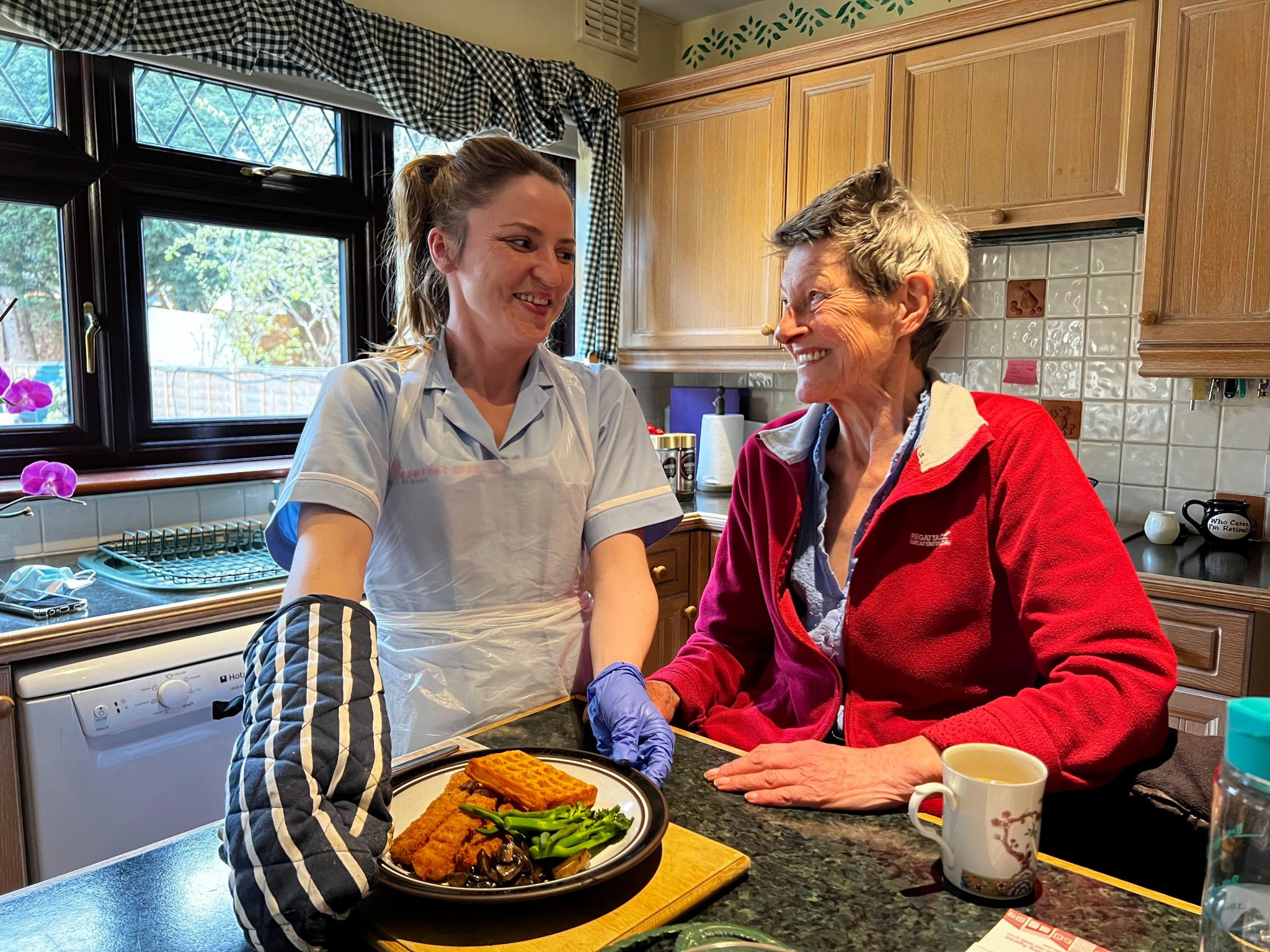
If you’re caring for a loved one with dementia, you may have noticed changes in their eating habits or appetite. These changes can be worrying, but understanding why they happen – and how to adapt to them – can help you provide the best support.
In this guide, we’ll explain why these changes occur, highlight signs to watch for and share practical tips to help your loved one maintain good nutrition and enjoy meals at home. We’ll also outline when to seek medical advice and how professional home care can provide additional support.
Why Does Dementia Change Eating Habits and Appetite?
Dementia can affect the brain in ways that alter how a person experiences food, hunger and mealtimes. Some people may eat less, forget to eat or find it harder to use cutlery and feed themselves, while others might crave sweets or unusual food combinations. These shifts are not intentional; they’re a result of how dementia impacts memory, senses and physical abilities.
Here are some of the most common reasons for changes in eating habits.
Memory and Recognition Issues
Memory and recognition difficulties can have a significant impact on eating habits. Your loved one may forget they’ve already eaten, which can lead to overeating or, in some cases, refusing meals altogether. They might also struggle to recognise familiar foods or utensils, making it difficult to begin eating. Even small changes, such as presenting food in a different way or introducing unfamiliar dishes, can cause confusion or reluctance at mealtimes.
Coordination and Physical Challenges
Dementia can affect coordination and fine motor skills, making everyday actions at mealtimes more difficult. Your loved one may struggle to hold cutlery, lift a glass or bring food to their mouth, which can make eating frustrating or tiring.
In some cases, other conditions such as Parkinson’s disease, which can occur alongside dementia, may further affect movement and coordination, making mealtimes even more challenging.
Sensory Changes
Changes to taste and smell are common in both ageing and dementia, and this can have a noticeable impact on food preferences. Once enjoyable meals may seem bland, leading some people to prefer stronger flavours – particularly sweet or salty foods. Others may begin to mix flavours in unusual ways or develop entirely new food preferences.
Swallowing Difficulties (Dysphagia)
As dementia progresses, some people may have trouble chewing and swallowing – a condition known as dysphagia. This can increase the risk of choking, as well as malnutrition and dehydration if eating becomes more difficult. Signs to look out for include coughing or choking during meals, holding food in the mouth without swallowing or taking significantly longer to finish meals than usual.
Visual and Spatial Awareness
Dementia can affect how a person sees and interprets their surroundings. Poor eyesight or difficulty judging distances may make it harder to see food clearly on a plate or locate items on the table. A cluttered table or dim lighting can add to this confusion, making mealtimes feel overwhelming or disorienting.
Emotional and Psychological Factors
Emotional wellbeing can also play a big role in eating habits. Feelings of anxiety, low mood or frustration at mealtimes can reduce appetite and make eating feel like a stressful experience. Some older adults may also feel embarrassed when they struggle to eat independently, leading them to withdraw or avoid meals altogether.
Common Signs That Dementia Is Affecting Your Loved One’s Eating and Appetite
Every person with dementia is unique, but here are some typical changes that you may observe.
- Weight loss or gain: Unintentional changes can result from reduced appetite, forgetting to eat or overeating.
- Skipping meals: Your loved one may refuse food or forget they’ve eaten.
- Difficulty using cutlery: Struggles with knives, forks or spoons may lead to messy or incomplete meals.
- Craving sweets: A preference for sugary foods is common as taste buds change.
- Eating non-food items: In advanced stages, some people may mistake inedible objects for food.
- Taking longer to eat: Mealtimes may increase as coordination or swallowing slows down.
- Avoiding certain textures: Crunchy, chewy or dry foods may become harder to manage.
If you notice these signs, it’s important to respond with patience and practical adjustments – not frustration. Small changes can make a big difference in helping your loved one eat well.
Practical Tips to Support Nutrition at Home
Adapt the Environment
- Reduce distractions: Turn off the TV or radio during meals to help your loved one focus on eating.
- Use contrasting colours: A coloured plate (e.g., blue or red) can help food stand out better against both the plate and the table.
- Improve lighting: Ensure the dining area is well-lit so food is visible.
Simplify Meals
- Offer finger foods: Easy-to-hold options like sandwich quarters, fruit slices or cheese cubes can encourage independence.
- Serve smaller portions: If large plates or portions feel overwhelming for your loved one, try smaller, frequent meals or snacks.
- Cut food into bite-sized pieces: This can make the portion feel more manageable, as well as reduce the need for cutlery use.
Focus on Nutrition
When dementia affects eating, the goal isn’t to follow a strict “healthy diet,” but to make sure your loved one is getting enough nutrition in a way that feels manageable and safe for them.
- Choose easy-to-eat, nutrient-dense foods: Offer softer options such as scrambled eggs, yoghurt, soups, stewed fruit or well-cooked vegetables, especially if chewing or swallowing is difficult.
- Adapt meals to appetite: If your loved one is eating less, offer smaller portions more often and include higher-calorie ingredients like cheese, cream or healthy oils where appropriate.
- Include fibre in a manageable way: Help prevent constipation with foods like porridge, soft fruits and cooked vegetables, rather than hard or difficult-to-chew options.
- Support hydration throughout the day: Offer drinks regularly, such as water, milk, herbal teas, squash or watered-down fruit juice. You can also include foods in your loved one’s diet that have high water content, soup, smoothies, ice lollies or jelly.
Be Flexible with Food Choices
- Respect new preferences: If your loved one suddenly loves sweet foods, incorporate healthy options like fruit or yoghurt.
- Experiment with textures: Soft, moist foods (e.g., stews, scrambled eggs) are easier to swallow.
- Avoid risky foods: Hard, sticky, or crumbly foods (e.g., dry biscuits) can pose a choking hazard.
Make Mealtimes Enjoyable
- Eat together: Social meals can stimulate appetite and provide comfort.
- Use familiar foods: favourite dishes from their past can trigger positive memories.
- Keep it calm: Avoid rushing or pressuring them to eat.
Monitor for Swallowing Issues
- Watch for signs of dysphagia: Coughing, choking, or a wet-sounding voice after eating.
- Adjust food consistency: Thicken liquids or puree foods if advised by a speech therapist.
- Sit upright: Ensure your loved one is fully awake and upright during meals.
When to Seek Medical Advice
While many eating challenges can be managed at home, some situations require professional input.
- Rapid weight loss or gain: This could signal nutritional deficiencies or other health issues.
- Frequent choking or coughing: Your loved one could be suffering from dysphagia; a speech and language therapist can assess swallowing safety.
- Refusal to eat or drink for 24+ hours: Dehydration and malnutrition are serious risks.
- Pain or discomfort: Dental problems, mouth ulcers or constipation may need treatment.
- Diabetes management issues: If blood sugar levels are unstable, a GP or dietitian can help adjust their care plan.
Your GP can refer you to specialists like dietitians, occupational therapists or speech therapists for personalised advice.
How Professional Home Care Can Help
Managing dementia-related eating challenges can be overwhelming, especially as needs evolve. Professional dementia care services can provide invaluable support.
Personalised Meal Assistance
- Carers can prepare nutritious meals tailored to your loved one’s preferences and dietary needs.
- They can assist with feeding, ensuring meals are eaten safely and comfortably.
Companionship at Mealtimes
- A familiar care professional can make meals more enjoyable and less stressful.
- They can encourage hydration and monitor for signs of swallowing difficulties.
Respite for Families
- Regular breaks allow you to recharge, knowing your loved one is in safe hands.
- Carers can also help with grocery shopping, meal planning and light housekeeping.
Expertise in Dementia Care
- Trained care professionals understand the unique challenges of dementia and can adapt their approach as your loved one’s needs change.
- Carers can liaise with GPs, dietitians and therapists to ensure coordinated care.
If you’re feeling overwhelmed, you’re not alone. Our experienced care professionals are here to help, offering practical assistance and peace of mind.
Whether you need occasional respite or regular support, reaching out can make a world of difference for both you and your loved one.
Need help managing dementia and eating challenges? Contact us for a free consultation with our compassionate care team.
FAQs About Dementia and Eating Habits
Why does my loved one with dementia want to eat all the time?
This can happen for several reasons. Memory loss may mean they forget they’ve already eaten, leading them to ask for food again. In some cases, dementia can also affect how the brain recognises feelings of hunger or fullness. Try offering small, regular meals or healthy snacks, and gently reassure them if they’ve already eaten. Keeping to a consistent routine can also help reduce confusion around mealtimes.
What if dementia patient refuse to eat?
Lorem ipsum dolor sit amet, consectetur adipiscing elit. Ut elit tellus, luctus nec ullamcorper mattis, pulvinar dapibus leo.
How can I reduce the risk of choking?
Ensure your loved one is sitting upright and comfortable during meals, and offer foods that are easy to chew and swallow. Cutting food into smaller pieces or choosing softer textures can help. If you notice coughing, choking or difficulty swallowing, seek advice from a GP or speech and language therapist, who can recommend safer food textures and techniques.
Are there supplements that can help dementia patient?
In some cases, nutritional supplements or fortified drinks can help if your loved one isn’t getting enough of what they need from food alone. However, these should only be used on the advice of a GP or dietitian to ensure they are suitable and used safely alongside your loved one’s diet.
How do I handle unusual food cravings?
Changes in taste and food preferences are common with dementia, including a stronger preference for sweet foods or unusual combinations. It’s generally fine to accommodate these preferences in moderation, especially if it encourages eating. Where possible, try to balance this with more nutritious options and focus on overall intake rather than perfection.
