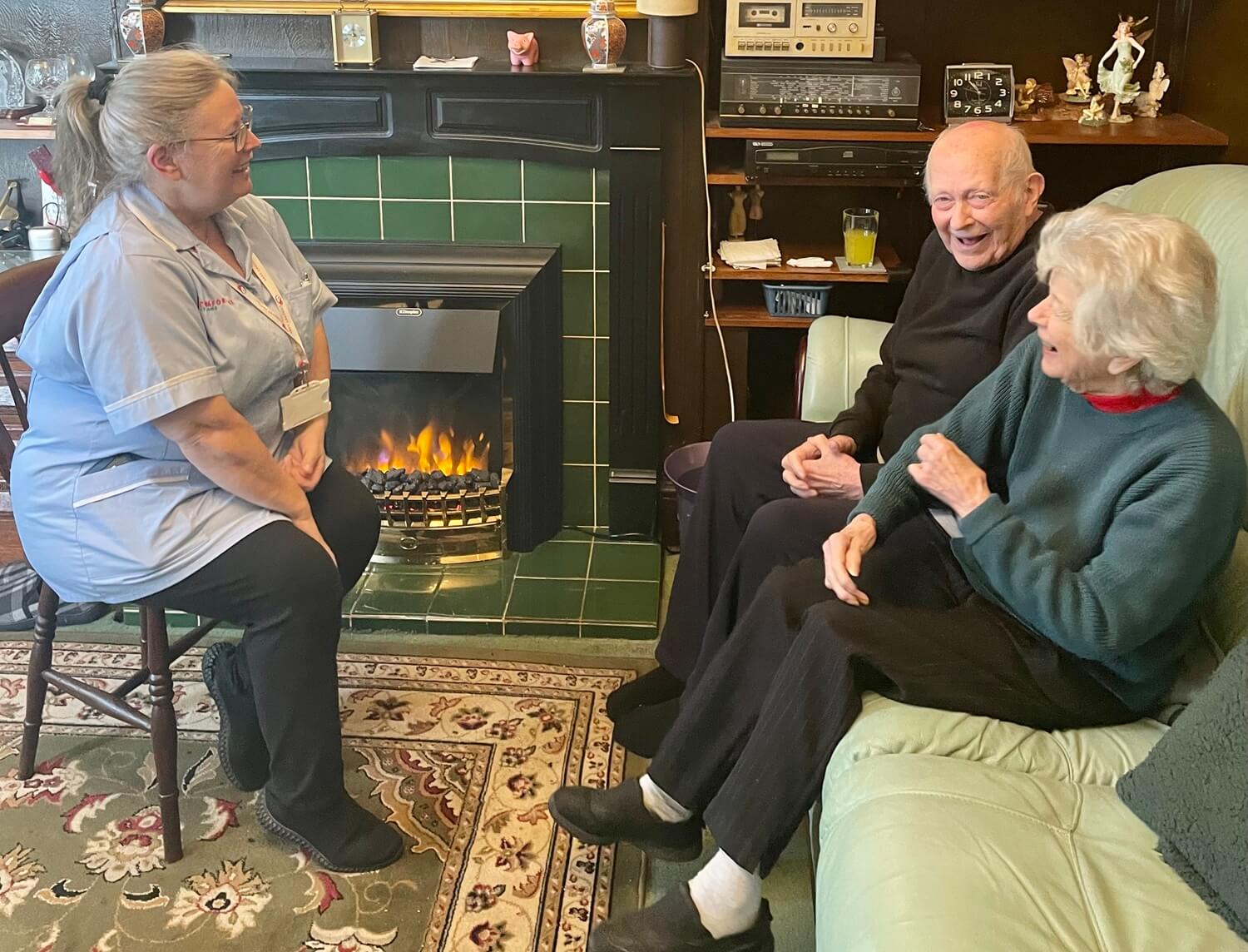
In this article, we’ll explore why companionship is so important for older adults, the impact loneliness can have on health and wellbeing and how families can support loved ones to stay socially connected.
Diabetes is a growing health concern for older adults in the UK, with more than 5.8 million people now living with the condition – many of whom are women over 65.
Depression in elderly people is a serious but often overlooked issue. While it’s normal to feel sad or low from time to time, persistent feelings of hopelessness, loss of interest or withdrawal are not a natural part of ageing.
For anyone living with diabetes, food plays a central role in managing blood glucose (sugar) levels. For families supporting an elderly loved one, understanding how diet affects diabetes is crucial to help them stay well at home.
The two most common types of diabetes are type 1 and type 2. For people living with a diabetes diagnosis, around 8% have type 1 diabetes and 90% have type 2.
We’re absolutely thrilled to share that Comfort Care At Home has been rated ‘Outstanding’ following our recent inspection by the Care Quality Commission (CQC).
To make things easier, the National Institute for Health and Care Excellence (NICE) has a helpful guide called the ‘six rights’ of medication administration.